
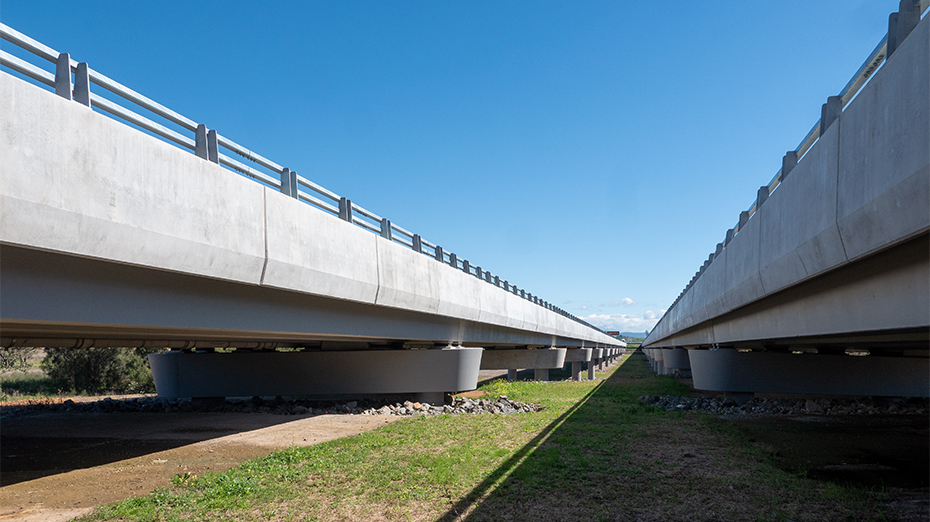
Rail networks, highway expansions, and water infrastructure all carry timelines that leave little room for rework or delay, and to meet them, the civil construction industry has shifted steadily toward offsite manufacturing.
In that shift, the precast concrete supplier’s role has changed. Suppliers are no longer simply material vendors delivering a commodity; they are foundational partners in the government infrastructure supply chain. From engineering coordination through logistics to compliance documentation, the role of a precast supplier is now deeply integrated into the successful delivery of modern public works.
We look at how that role plays out across the lifecycle of a major civil project, and why offsite manufacturing has become central to how public infrastructure gets built.
Early Contractor Involvement (ECI) and Design Optimisation
The traditional sequence of fully designing a project and only then tendering it to suppliers is evolving. On major government projects, precast suppliers are increasingly engaged during the Early Contractor Involvement (ECI) phase.
By collaborating with structural engineers and Tier 1 civil contractors early, precast specialists across the industry help surface constructability considerations before fabrication begins.
Input at this stage typically covers how elements can be dimensioned for efficient transport, where standardising element types allows moulds to be reused, and how installation sequencing can be simplified. Resolving these questions on paper, rather than discovering them on site, reduces custom fabrication costs and streamlines the installation program.
For public projects, that efficiency matters beyond any single contractor’s margin. Constructability optimisation during planning means public funds stretch further, waste is designed out early, and the delivery schedule is more predictable from the outset. It is one of the clearest illustrations of why the modern supplier relationship is a partnership rather than a transaction, and why choosing the right precast supplier matters to a project’s overall success.
Throughout, the manufacturer’s core function remains constant: to produce each element strictly to the approved designs and specifications the project’s engineers provide.
Navigating Strict Government Compliance and QA
Government bodies, from state transport authorities to water corporations, demand the highest levels of quality and safety, and the documentation burden reflects that.
A tier-approved precast supplier operates under exhaustive Quality Assurance frameworks, commonly certified to standards such as ISO 9001, and manufactures in accordance with the Australian Standards that govern the work, including AS 3600 for concrete structures and AS 3850 for prefabricated concrete elements. Meeting these Australian Standards for precast concrete is the baseline expectation for supplying public infrastructure, not a differentiator.
Underpinning it all is traceability. Suppliers document the complete lifecycle of every structural element: the origin of steel reinforcement, the concrete batch and mix design, slump and other fresh-concrete tests, and 28-day compressive strength testing results. Each element carries a verifiable history from raw material batching through to delivery.
This paper trail is not administrative overhead. For public works, it is mandatory at handover, allowing the asset owner to demonstrate that every component in a bridge, station, or culvert run meets the specified state and national codes. The rigour of that documentation is a large part of what separates a tier-approved manufacturer from a general concrete supplier.
De-Risking the Project: Offsite Manufacturing Benefits
Active infrastructure sites are dynamic and exposed, subject to weather, labour availability, and constant safety constraints. Offsite manufacturing addresses this by shifting the bulk of structural concrete work into a controlled environment.
The risk transfer is tangible. Factory production continues regardless of the weather that would halt a site pour. Curing happens under stable, controlled conditions, supporting greater consistency element to element. And because finished components arrive ready to install, far fewer personnel are required in high-risk positions on the live site.
That last point carries real weight on public projects, where safety performance is closely monitored. Reducing the hours crews spend forming and pouring beside live infrastructure is one of the most direct ways precast concrete improves on-site safety, and it is a benefit the cast-in-situ approach cannot match under the same time pressures.
Precision Logistics and Just-In-Time (JIT) Delivery
Manufacturing parapets, noise walls, or retaining structures is only half the equation. Delivering them to congested urban sites or remote regional corridors demands serious logistical coordination.
Precast suppliers manage a web of transport variables: heavy haulage permitting, route surveys and sweep-path analysis, load restraint, and escort vehicles for oversized elements. The goal is to align dispatch with the construction front so elements arrive exactly when the site crane is ready to receive them.
Just-in-time delivery is the mechanism. By sequencing trucks for the installation program rather than stockpiling on-site, suppliers keep constrained corridors clear and the program flowing. On projects with genuinely no laydown space, this cradle-to-crane approach is the only way the work proceeds, a discipline reflected in any thorough site supervisor’s checklist for receiving precast elements.
Supporting Sustainable Infrastructure Goals
Modern government projects increasingly mandate environmental and sustainability benchmarks, and the precast method supports these goals in several inherent ways.
Controlled factory batching significantly reduces the material waste associated with cast-in-situ methods, where over-ordering and washout are routine. Consolidating deliveries of finished elements can reduce transport emissions compared with numerous individual concrete truck movements to the site.
Additionally, durable, high-quality elements extend the service life of public assets, which reduces maintenance and spreads the embodied carbon of the infrastructure across many more decades of use, a key factor in how long precast concrete lasts in demanding public applications.
Partner with Ozcast for Your Next Civil Project
Delivering major public infrastructure requires supply chain partners who understand the complexities of compliance, scale, and logistics.
At Ozcast, we manufacture precast concrete elements strictly in accordance with the approved project designs and specifications, backed by the QA traceability and delivery coordination that Tier 1 contractors and government projects demand. Contact our team today to discuss how we can support your next major civil infrastructure development.


