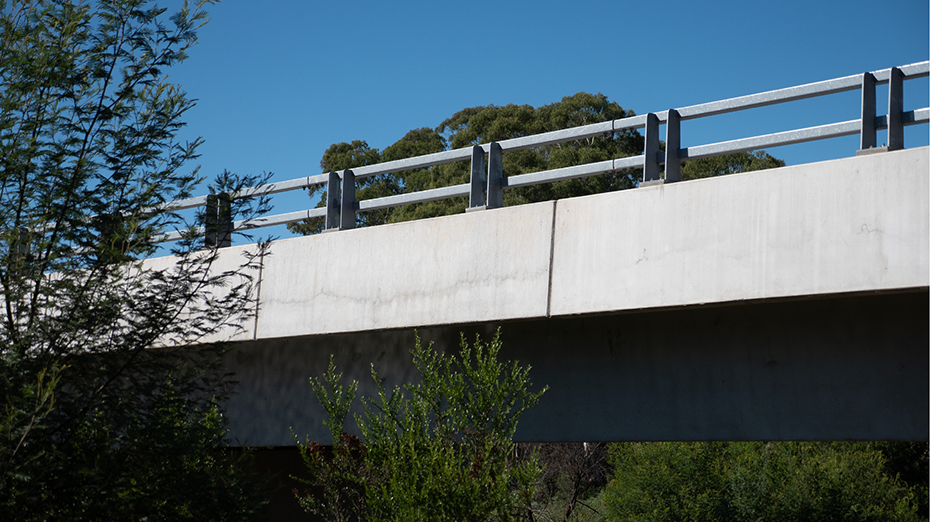
As one of Australia’s leading precasting businesses, specialising in producing high-quality, 3D modelled parapets for bridges and transport infrastructure, Barry has seen the importance of AI-powered technology on the future of precasting, and has put his money where his mouth is!
We sat down with Barry and asked him about AI and precasting, and here’s what he had to say.
Q: How did Ozcast get involved with AI and precasting?
“In Europe, there has recently been a lot of experimentation with automation and technology, aimed at reducing the more physically demanding aspect of the job. I’ve been to many trade shows and demonstrations over the past few years and seen what’s working and what needs improving. As a result of my research, we were one of the first Australian precast businesses to implement 3D Rendering and Modelling as part of our toolkit, and it has radically changed the way we work,” says Barry.
Q: What are the benefits of 3D modelling?
“In a nutshell: cleaner, safer, more efficient and higher-quality precasting. Creating a 3D model of the entire construction, incorporating the architect drawings and total construction plan, helps us predict and eradicate potential on-site issues and clashes, significantly reduces on-site revisions and re-thinks – and saves our clients both time and money in the long run,” says Barry.
“Traditional precasting can lead to many hours of hammering out chunks of concrete to force ‘square pegs into round holes’ on site. When the parapets have been cast in moulds resulting from 3D Modelling of the whole construction, and taking into consideration the curves and structural variations etc., Ozcast parapets arrive on site ready to be fitted together like Lego!
“Other benefits of this include less debris on site, less down time and even less injuries to the crew. And then there’s the cost of hiring cranes – any idle crane time due to mismatches and the need to on-site improvisation is a massive drain on your client’s budget!”
Q: What do you mean by “dragging precast out of The Stone Age”?
“The Precast industry has generally been slow to embrace the new technologies available to it. Young people are not attracted to dusty factories and mucky building sites anymore – they want to be at the cutting edge of tech and find new ways to apply it.
At Ozcast, we were one of the first precast businesses to implement 3D rendering and modelling as part of our toolkit, and as we discovered the possibilities and applications, it has radically changed the way we work.
While some of our competitors use 3D modelling as a nice-to-have, we use it as proof of concept, to create a 3D model of the entire construction (not just our precast solutions) incorporating the architect drawings and total construction plan to predict and eradicate potential on-site issues and clashes. This helps our partners fine-tune their designs, as well as significantly reduce on-site revisions and re-thinks. No one else is embracing the potential of tech in precasting to the extent that we are, and our clients are well aware of it.
Disrupting the old ways of thinking by adopting new technologies and embracing the potential of AI has allowed us to attract younger, more inquisitive and inspirational thinkers to the business. Our vision is to shift the percentage of staff from 20% in office and 80% in factory to more of a 50/50 balance. This will be achieved by our increasing reliance on AI and robotisation of manual tasks like steel cutting, and employing trail blazers who will, as I said, drag precasting out of the Stone Age – and go on to be the future thought leaders our industry so desperately needs,” says Barry.
Q: Adopting 3D-modelling was a huge leap of faith – was it all smooth sailing?
“No!” says Barry. “We could see that there was potential in 3D Modelling – after all, it was being used in different forms in Europe and the US. But nobody was even thinking about it in Australia. So, we decided to take the leap.
The biggest hurdle to overcome was our total lack of understanding of 3D Modelling – how it worked, how it could be applied to precasting, and who would be able to help us make sense of it. We hired a variety of ‘experts’ to try and unlock the potential. But it wasn’t until we found the right person to take a basic understanding of the innovation, and combine it with a deep knowledge of precasting that the possibilities started to present themselves. Once we found this right formula, we were off, and we haven’t looked back.”
Q: The future of precasting looks bright – is everyone else on board the AI train?
“We have noticed that some of our larger competitors have started offering 3D modelling as part of their service offering, so that’s something we can take credit for! Our deeper dive into the possibilities of 3D modelling and AI (and the results this approach has generated) has and will inspire the industry to follow, but they are still a long way behind us. Beyond creating attractive (but technically useless) animations, we utilise 3D modelling to size and situate steel inside our precasts, to calculate the exact amount and type of concrete to use and to create the moulds to produce precise precast materials designed to fit together perfectly on site. We have just acquired a new piece of kit that can cut steel to size, automatically adjusting individual pieces via AI camera work and even stack it in user-friendly piles… For us, this is the tip of the tech iceberg, and the start of an exciting new chapter in precasting which will shape the future of our industry.
We’re all about evolving the way we approach the business, adopting best-practice examples from other industries and constantly looking for ways to improve efficiencies across the whole process. By embracing technology and challenging the status quo, we are attracting a new generation of future leaders who share our mindset and will continue to transform the precasting industry – and inspire other industry leaders to follow suit.”
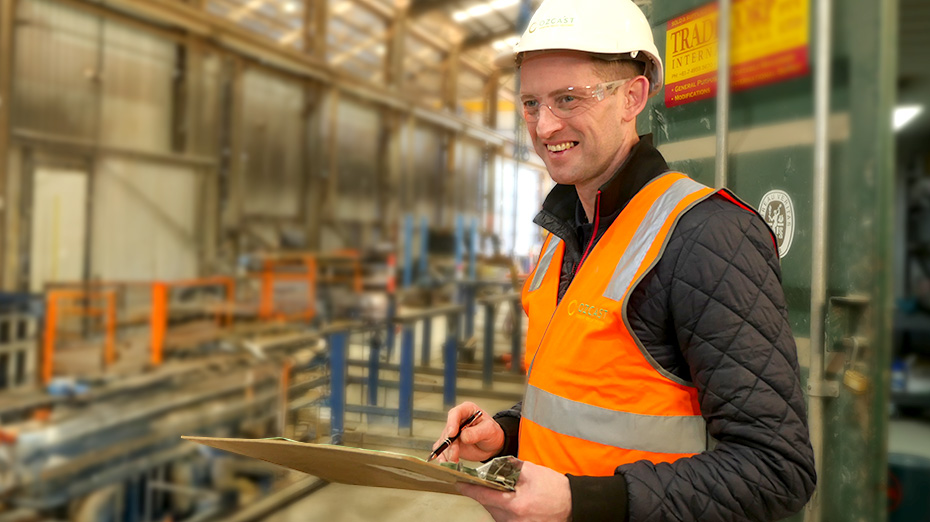
Barry Lindsay is passionate about sharing his vision for the future of the precast industry with his peers, and is always keen to participate in important networking events to discover new and better ways of working. He is also an advocate of a new national syllabus for precast concrete, as well as the National Precast Association of Australia (NPCAA)’s pilot program that offers micro-credentials which ultimately provide the qualification of Certificate: Fundamentals of Precast. These educational programs are designed to inspire and empower the next generation to become part of the industry and continue its modernisation and transformation.
Want to find out more about Ozcast and the future of precasting in the Age of AI?