Let us look at the different forms and types of parapets, their amazing crash-protection functions, and why precast concrete is the secret to strong, durable, and efficient parapets.
Crash Barrier Function of Parapet Walls
Bridge parapet walls are critical to road safety, acting as a multifunctional crash barrier. According to the Austroads Bridge Design Guide, parapets reduce accident severity and provide structural protection for road users.
Vehicle Containment
Parapet walls are designed to stop vehicles from breaching the edges of bridges during collisions.
- Withstands high-impact crashes due to errant vehicles
- Redirects vehicles back onto the road
- Reduces the risks of falls into the road, river, or valleys below
Pedestrian and Cyclist Protection
Parapets on bridges shared by pedestrians, cyclists, and vehicles create a protective edge barrier
- Prevents falls and slips off the bridge edges
- Separates users from vehicle traffic
- Ensures safe shared usage of the bridge deck
Impact Energy Dissipation
Parapet walls reduce the severity of collisions by absorbing and dispersing impact energy.
- Deflects energy away from high-impact zones with a sloped or curved design
- Absorbs and spreads crash forces
- Reduces damage to vehicles and injury to occupants
Guidance and Visibility
Aside from physical protection, bridge parapet walls improve bridge navigation and visibility.
- Defines road edges to secure drivers, especially in poor lighting conditions
- Enhances safety with fitted reflectors or painted surfaces
- Supports safe night-time and low-visibility driving
Austroads recommends bridge parapet wall guidelines, including the correct height, gap limits, energy dissipation qualities, and visibility to ensure effective performance even in hazardous road conditions.
Common Bridge Parapet Wall Forms and Types
Bridge parapet walls come in various forms, each one with specific functions, suitable for a particular environment. The Austroads Bridge Design Guide outlines these key types according to structural behaviour, safety performance, and design features.
Solid Concrete Parapets
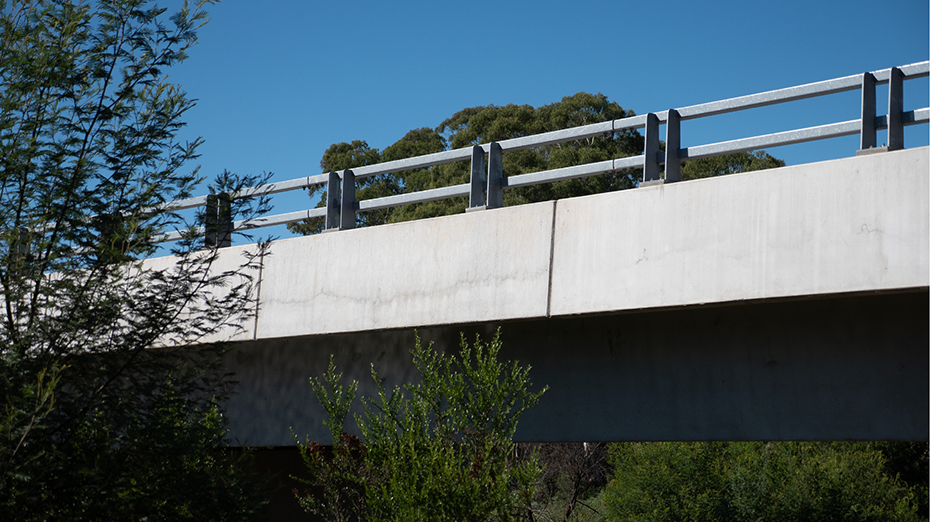
This type of parapet is rigid, ideal for maximum containment. Solid concrete parapets are heavy-duty, capable of stopping and redirecting vehicles with minimal deflection, usually installed on high-speed or high-risk roads.
Open-Top Parapets
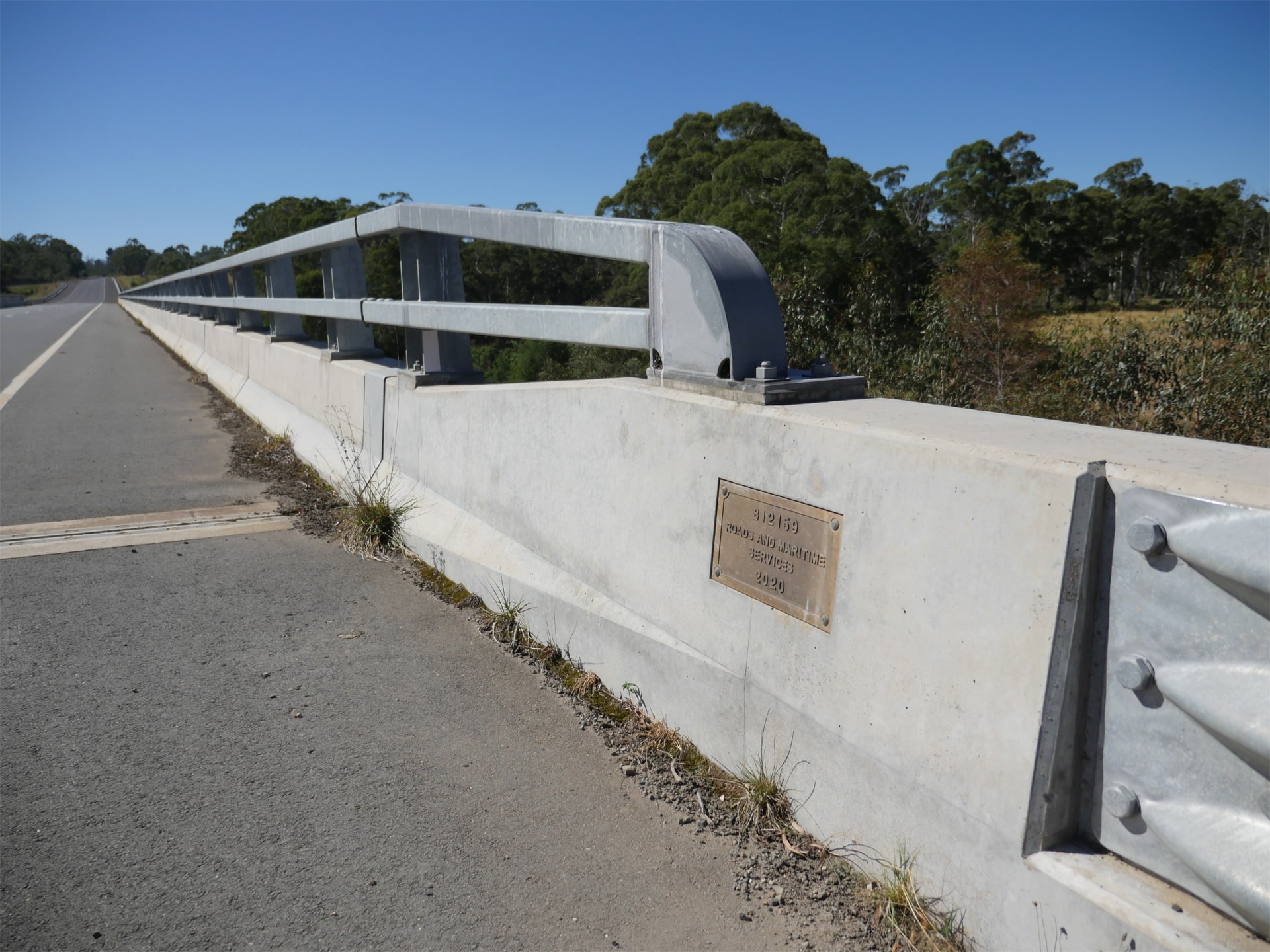
These are lighter barriers with rails or metal components. Open-top parapets are common on urban bridges or pedestrian viaducts where drainage is critical and an open design is desired.
Profiled Parapets
This type of parapet has a sloped or curved surface, creating an aerodynamic performance and visual appeal. Profiled parapets decrease wind drag and seamlessly integrate them with the surrounding architecture.
Integrated Noise Barrier Parapets
These parapets combine effective crash protection with noise shielding, reducing traffic noise for nearby homes. A hybrid system is common in urban motorways or along elevated corridors located near communities.
Containment Level Comparison
Here is a table comparing the containment levels (containment rating) of the different parapet types.
| Parapet Type | Typical Containment Rating | Use Case |
| Solid Concrete Parapet | N2 – H2 | High-speed roads and highways |
| Open-Top Parapet | N1 – N2 | Local roads, bridges with drainage needs |
| Profiled Parapet | N2 – H2 | Aesthetic usage and for wind-sensitive structures |
| Nose-Barrier Parapet | N2 – H2 | Urban bridges and along noise-sensitive areas |
The EN 1317, a European standard for road restraint systems, defines containment levels for parapets. These levels (N1, N2, H1, H2, H3, H4a, H4b) indicate the barrier’s ability to prevent vehicles from veering from the roadway in the case of an impact. N1 is the lowest containment level, while H2 offers a higher level of containment.
Materials for Crash-Resistant Parapet Walls
Selecting the right material for a bridge parapet wall ensures safety, durability, and efficient construction. Crash-resistant parapets must withstand impact but must also be reliable over time. Here are the most commonly used materials in manufacturing bridge parapet walls.
Precast Concrete
Precast concrete is the top choice for modern bridge parapet walls because of its consistent quality, ease of installation, and compliance with international standards.
We manufacture ISO-certified and precision-engineered panels that can be installed rapidly, reducing construction timelines and traffic disruptions. Therefore, for infrastructure with tight deadlines and strict quality requirements, precast concrete systems are the best option.
Cast-In-Situ Concrete
Cast-in-situ means pouring concrete directly on-site into a formwork, creating a monolithic structure that integrates effectively with the bridge deck. This material is strong and durable but may be time-consuming and weather-dependent, making cast-in-situ less ideal for projects that need fast completion.
Steel-Reinforced Concrete
Steel-reinforced concrete parapets combine the compressive strength of concrete and steel’s tensile resilience. These systems offer improved energy absorption during crashes, making them the best choice for parapets for higher containment features.
Composite Systems
Examples of composite systems are polymer-concrete blends, which are lightweight, ideal for conditions where weight reduction or corrosion resistance is vital. Although composite systems may not be as common, they are becoming increasingly popular in updated bridge designs.
Ozcast Precast stands out for our ability to streamline construction and maintain the high performance and safety of our precast concrete bridge parapet systems.
Design Considerations and Standards
Bridge parapet walls must comply with strict Australian safety and performance standards while addressing practical and aesthetic requirements.
Containment Level Requirements
Austroads and the Manual for Assessing Safety Hardware (MASH) designate parapet containment levels (N1, N2, H1, H2). These define the wall’s ability to withstand and redirect vehicles of different masses and speeds. The level depends on the road type, traffic volume, and crash risk.
Height and Thickness
The height and thickness of bridge parapet walls are determined by the type of bridge, the required containment level, and local regulations. Generally, parapet walls installed on road bridges must have a height greater than 1.2 metres. The common minimum thickness is 180 mm for normal containment and 325 mm for very high containment levels.
Drainage and Maintenance Access
Parapet walls must have adequate drainage to prevent the buildup of water behind them. Weep holes or scuppers may be included in the design to ensure proper drainage. Meanwhile, access points or clearances for inspection and maintenance must also be included without impacting safety.
Aesthetic Integration
The parapet wall design should also complement the surrounding environment. Some options include coloured or textured concrete finishes, anti-graffiti coatings, and other features to allow the parapet to blend with urban and natural landscapes.
Construction and Installation Best Practices
Proper construction and installation of bridge parapet walls ensure long-term safety and efficient performance. The following are best practices:
Precast Panel Handling
Precast parapet panels must be lifted along certified lifting points and installed precisely using cranes. The panels must align with grout joints and are secured by anchor bolts or dowel connections as specified in the installation design. Carefully handling precast parapets prevents damage to their edges and finishes.
Joint Sealing and Waterproofing
Applying high-performance sealants and installing flashing systems can help avoid water ingress, which can lead to corrosion and structural damage. These create a continuous watertight barrier along the length of the parapet wall.
Quality Assurance
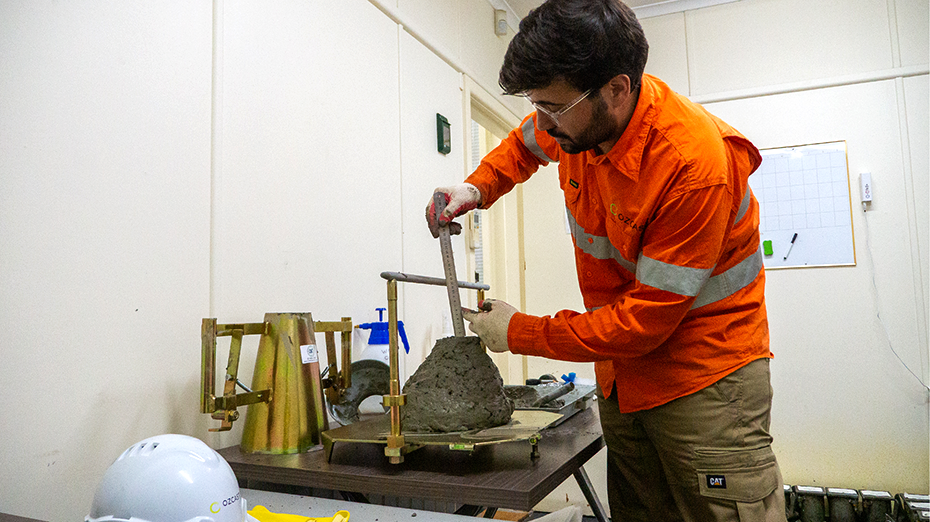
All our precast bridge parapet walls undergo strict factory testing to ensure strength, durability, and dimensional accuracy. On-site, these panels are inspected for correct placement, alignment, and secure anchorage.
Safety During Installation
Construction teams must adhere to strict traffic management protocols to ensure the safety of road users and workers during parapet installation. Installing fall-prevention systems, such as edge protection or harnesses, is required for workers working near the bridge edges.
Maintenance and Longevity of Bridge Parapets
Bridge parapet walls require regular maintenance and timely repairs to ensure long-term safety and performance.
Routine Inspections
Regular inspections, including crack mapping, joint integrity checks, and surface wear monitoring, help identify early signs of structural stress and early deterioration.
Cleaning and Coating Renewal
Pressure washing bridge parapet walls is the best way to remove dirt, pollutants, and graffiti. This must be done regularly to avoid dirt buildup. Applying protective coatings, including anti-corrosive sealants and graffiti-resistant finishes, preserves parapet aesthetics and durability.
Repair Techniques
Patch repairs can repair minor cracks, while joint resealing helps restore waterproofing. A full panel replacement is needed for damaged sections. Precast bridge parapets allow easier and quicker replacement without structural disruption.