
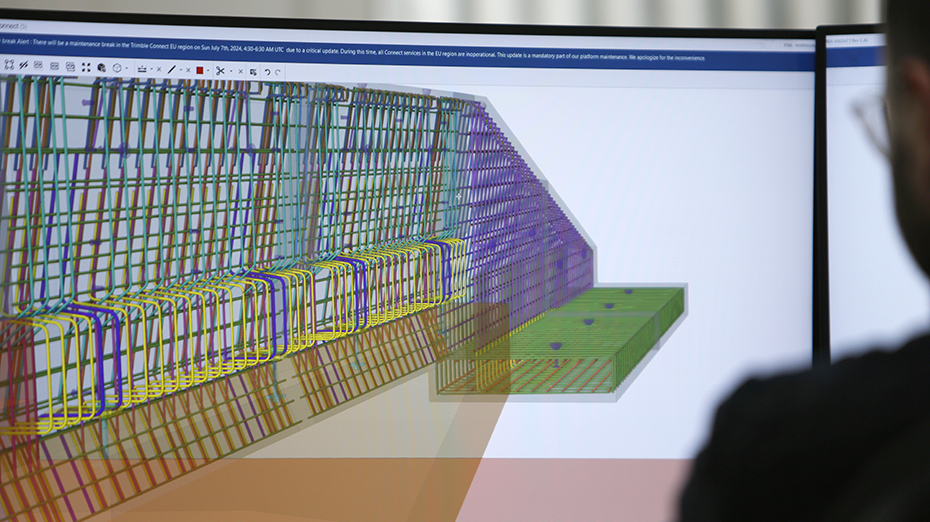
When project timelines are tight and budgets have no room for rework, traditional precast methods are not enough. Complex structural frameworks require a manufacturing partner capable of translating engineering intent into infrastructure-grade components with absolute precision.
This is where Ozcast creates real value. We are a premium precast manufacturer capable of absorbing technical complexities before materials reach the worksite. Through detailed coordination, rigorous quality control, and exact production tolerances, we deliver precast elements engineered for seamless assembly. The result is faster installations, fewer delays, and confident contractors working with zero friction.
Defining a Precast Structural System
Not all precast concrete is the same. Simple standalone components such as retaining walls, drainage pits, or solid, unreinforced concrete barriers serve important uses, but are typically isolated elements performing a single, basic function.
A true precast structural system is far more complex. It is a fully integrated framework of engineered components designed to work together as the primary load-bearing structure of a building or a major infrastructure asset. Every component is manufactured to precise tolerances so it connects seamlessly on site and transfers loads exactly as intended by the structural engineer.
Structural Civil Frameworks
For major transport infrastructure, precast systems form the critical framework of elevated roadways and bridge structures. Specialised components, such as high-performance bridge parapets, are engineered to lock seamlessly into these large-scale civil projects. Arriving on-site fully ready for installation, these units enable complex roadwork programmes to progress safely and efficiently, eliminating the delays associated with traditional construction methods.
Load-Bearing Systems
Precast also forms the main vertical and lateral support of multi-storey projects. Structural wall panels, lift cores, stair shafts, and shear walls are designed to resist gravity loads, winds, and movement forces. Precast is vital for apartments, hotels, hospitals, and mixed-use developments where speed and structural integrity are critical.
Custom Civil Structures
Aside from buildings, precast structural systems also include bespoke heavy-duty elements for bridges, rail corridors, tunnels, and civic infrastructure. These custom-built components are designed for demanding loads, harsh environments, and long service life, definitely a reliable solution for complex civil developmental builds.
Engineering Precast Structures for Structural Integrity
Structural integrity is achieved long before installation starts. In modern precast systems, every panel, beam, column, slab, and connector is analysed during the drafting and engineering stages to ensure the completed structure performs safely under real-world conditions.
With advanced modelling software and structural calculations, engineers can assess how forces move through the asset, how the different components interact, and which connection or reinforcement must be strengthened. This precision allows precast systems to deliver dependable, long-term performance.
Gravity Loads
Every precast element must resist gravity loads. These are divided into dead loads, which include the self-weight of the concrete components, facade systems, and permanent fixtures, and live loads such as vehicles, occupants, stored goods, or movable equipment.
Precast components are designed to allow these vertical loads to transfer seamlessly through slabs into beams, columns, walls, and finally, the foundation system. An accurate load path design is critical for reducing deflection, cracking, and overstressing of components.
Wind & Seismic Loads
Lateral forces are considered an entirely different force during the design process. Wind pressure, suction forces, and potential seismic movement can place stress on the structure sideways rather than vertically.
To ensure stability, precast systems incorporate shear walls, rigid diaphragms, braced cores, and engineered connection details that ensure these forces are distributed safely.
Dynamic Loads
Transport and civic infrastructure must also withstand dynamic loads due to repeated movement and vibrations. Bridges, loading docks, rail assets, and traffic structures are prone to cyclic stresses from vehicles, braking forces, impact loading, and operational vibration. Precast elements for these applications are designed with fatigue resistance, reinforcement detailing, and durable connection systems to ensure long-term repetitive loading without premature deterioration.
Manufacturing Tolerances and Connection Design
If precast concrete dimensions drift, inserts become misplaced, or interfacts fail to align, contractors are forced to cut, drill, pack, or rework these elements on site. These additional tasks create delays, added costs, and unnecessary safety risks. Precision manufacturing avoids these issues by ensuring every component arrives ready to connect exactly as designed.
Critical Connection Interfaces
Modern precast concrete structures rely on highly detailed cast-in connection systems that transfer loads safely between elements. These include embedded ferrules, weld plates, threaded inserts, starter bars, dowel holes, lifting anchors, bearing plates, and recessed fixings. Each interface must be accurately positioned in three dimensions to allow adjoining components to align perfectly under crane installation conditions. Even tiny deviations can affect bolt engagement, weld quality, grout cover, or structural load paths.
Millimetre-Controlled Manufacturing
At Ozcast, mould preparation, reinforcement placement, and cast-in item installations are handled in controlled factory conditions using calibrated methods and repeatable quality control. Dimensions, squareness, cover, and insert locations are checked against approved shop drawings before and after fastening. This level of tolerance control allows millimetre-accurate manufacturing, ensuring each unit integrates with adjoining elements as intended.
Seamless Site Assembly
When tolerances are achieved in the factory, site workers can focus on safe and efficient assembly rather than corrective work. Grouted sleeve connections can seat properly, welded plates can meet cleanly, and bolted interfaces can be tightened without forcing misaligned holes or shimming irregular gaps. There are faster crane cycles, minimal installation stoppages, reduced working-at-height exposures, and a cleaner handover between the manufacturing and the construction crew.
Design for Manufacture and Assembly (DfMA)
DfMA is the strategic planning process aligning architecture, structural engineering, manufacturing, transport, and installation into a single coordinated pathway. Rather than designing first and dealing with buildability issues later, DfMA ensures each component is manufactured with real-world production and assembly in mind from the outset.
Early Collaboration for Better Outcomes
In DfMA, early collaboration with a specialised precast manufacturer is critical. This allows the architect’s visual intent and the structural engineer’s performance requirements to be translated into practical precast solutions. Essential components are considered, including panel sizes, lifting points, connection zones, transport limits, crane capacities, and installation sequencing; these are resolved during the design stages rather than becoming costly issues later.
Designing for Seamless Production
DfMA focuses on how components will be manufactured at scale. By rationalising dimensions, repeating connection details, and standardising complex elements, mould systems can be reused more efficiently, allowing seamless and predictable production runs. Reinforcement layouts, cast-in items, and finishes are also refined so each element can be produced consistently without unnecessary labour or material wastage.
Faster Assembly, Lower Project Risk
As design decisions support manufacturing efficiency, the benefits are undeniable on-site. Components arrive organised and ready for installation, fit together accurately, and require fewer adjustments under crane time pressures. Precast reduces programme delays and labour costs, and improves worksite safety.
DfMA is more than a design philosophy for developers, engineers, and builders. It is a significant advantage. By integrating manufacturing intelligence into the drafting phase, projects achieve lower waste, reduced costs, accelerated timelines, and efficient delivery.
Logistics, Staging, and Site Delivery
Precast manufacturing is just the beginning. The real challenge is synchronising production output with the construction programme so that every element arrives exactly when it’s needed. Poor sequencing can lead to congestion, downtime, storage issues, and programme disruptions. These are reasons why supply chain orchestration is important.
Programme-Aligned Production Sequencing
Ozcast considers production schedules around the project staging sequence, not just around convenience. Structural elements are manufactured in the order they are needed, allowing prioritisation of components for early works, core stages, or critical milestones to be dispatched first. This coordinated workflow gives contractors greater certainty and ensures downstream trades are aligned with specific programme targets.
Heavy Haulage Transport Planning
Transport logistics are also specialised. Many structural precast elements are oversized, heavy, or irregularly shaped, requiring heavy haulage planning, route assessments, permit coordination, and load restraint engineering. Delivery windows must also consider traffic restrictions, access limitations, and local authority requirements.
Just-in-Time Site Delivery
Our just-in-time delivery ensures elements are sent to the worksite only when receiving teams, access zones, and scheduled resources are ready to avoid unnecessary double-handling. This also reduces the need for laydown space and prevents worksites from becoming cluttered with stored materials. In contained, busy urban projects, timing and precision are critical.
A reliable supply chain ensures structural components flow to the worksite in the correct order, at the exact time, and in line with the project’s programme demands.
Applications in Major Australian Civil Infrastructure
Precision-manufactured precast concrete elements are critical in Australia’s most demanding infrastructure and commercial projects. Tier 1 developers, principal contractors, and government delivery teams rely on engineered precast solutions where certainty, performance, and compliance are never compromised.
Across highway upgrades, these systems are used as bridge components, parapets, retaining structures, and traffic barriers that must meet critical engineering specifications and strict delivery schedules. In rail corridors, precast elements support platforms, pits, culverts, cable routes, noise walls, and structural interfaces where limited possession windows require reliable supply and exact tolerances.
Whether aligned to TfNSW standards, local authority requirements, or project-specific engineering criteria, precision precast manufacturing ensures each unit is produced to specification and delivered ready for installation. This certainly is the reason why precast concrete remains a preferred construction material.
Partner with a Leading Precast Manufacturer
Partner only with an experienced precast manufacturer early in the design phase to ensure maximum efficiency, precision, and constructability. Early collaboration reduces risk, streamlines delivery, and achieves stronger outcomes.
The success of a complex structural framework is determined long before it arrives on site. Ensure your next major infrastructure project is built on precision, efficiency, and uncompromising quality. Contact our team today and secure a trusted precast structural supplier for your Tier 1 development.