Precast concrete is a building material of choice for hyperscale and colocation facilities, valued for its fire resistance, security performance, and thermal mass. But specifying precast is one thing; getting multi-tonne elements from the manufacturing plant to the crane hook, on time and undamaged, is another. That final link in the chain is a heavy-haulage and scheduling discipline in its own right.
At Ozcast, we explain how precast concrete data centre logistics actually work, from factory staging through permitting to the lift, and how we manage delivery to keep fast-track builds moving.
Factory Staging and Just-In-Time (JIT) Scheduling
Data centre sites rarely have the laydown space to store dozens of 15-tonne wall panels. The site is busy, sequenced, and tight, which makes a strict Just-In-Time (JIT) model essential rather than optional.
Sequence-based casting. Elements are cast and cured in the order the site erection crew needs them, so production output maps directly to the installation front.
Factory yard staging. Completed elements are staged in Ozcast’s manufacturing yard, fully cured, quality-checked, and tagged for traceability, ready to dispatch on call.
Direct unloading. Trailers are timed to the crane schedule so elements can be rigged and lifted straight from the trailer bed into their permanent position, the cradle-to-crane approach that keeps congested sites clear.
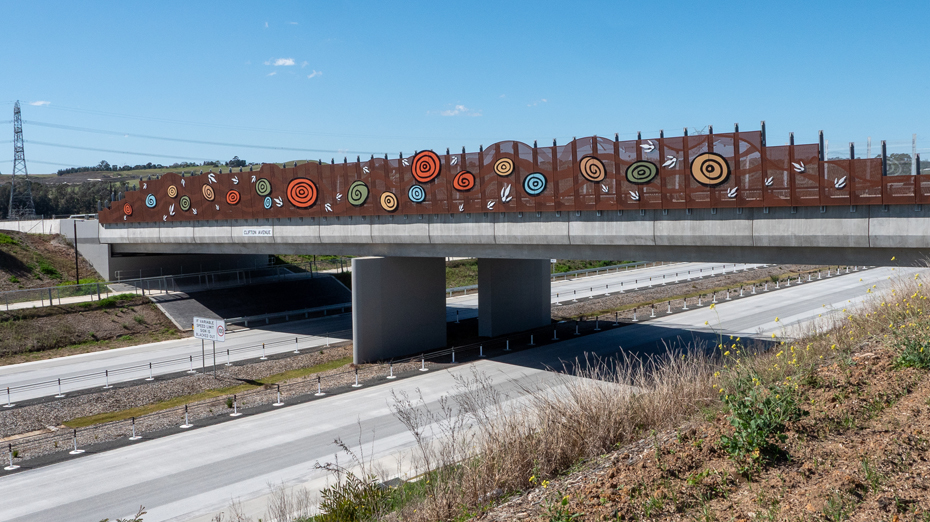
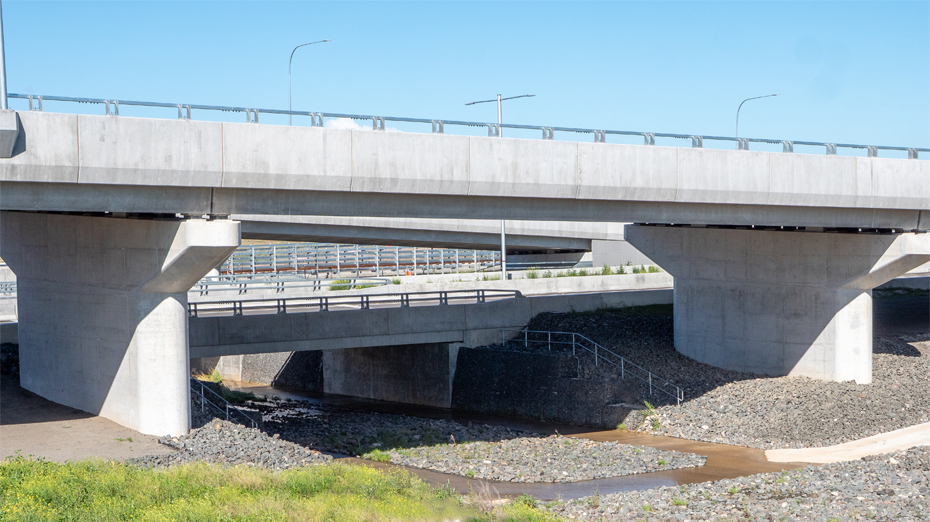
Ozcast has run exactly this offsite-buffer role on constrained civil sites. On the Prospect Highway Upgrade, where there was no laydown space at all, every delivery was sequenced to the installation window, proof that JIT delivery is a practised routine, not a theory.
Navigating Heavy Haulage, Permits and Route Logistics
Moving oversized precast elements is a planning exercise long before it is a driving one. Getting a tall panel or heavy structural element to a data centre gate compliantly involves several moving parts.
Fleet and trailer selection. Each element is matched to the right transport: A-frame trailers for vertical panel transport, flatbeds for flat elements, and low-loaders for tall or heavy units that need the deck height kept down.
NHVR compliance and permits. Movements run under the Heavy Vehicle National Law (HVNL). Oversize or overmass (OSOM) loads require National Heavy Vehicle Regulator (NHVR) permits, with axle mass limits and pilot or police escort requirements confirmed against the load and route in advance.
Route sweeps and access audits. Digital and physical route audits check bridge weight capacities, overhead wire clearances, and the turn geometry into tight industrial site gates, so a low bridge or a tight radius never halts a delivery on the day.
Night and off-peak movements. Night-time transport windows are used to bypass urban congestion and time arrivals so trucks reach the gate as the day shift begins.
Under the Chain of Responsibility provisions of the HVNL, every party in the chain shares accountability for load restraint, mass compliance, and fatigue management, so the manufacturer’s dispatch discipline is as important as the driving itself.
Panel protection is planned into every load. Heavy elements are secured with engineered dunnage at their nominated support points, along with chains and edge protection, configured to prevent structural cracking or cosmetic spalling in transit.
Site Arrival, Traffic Management and Lift Safety
The transition from public road to active construction site is a heavily managed moment.
On-site traffic control. Designated holding bays and strict entry schedules prevent trucks queuing back onto the public roads around industrial estates.
Rigging and unlatching safety. Clear protocols govern how drivers and riggers remove chains and restraints, ensuring vertical panels on A-frames are fully secured by the crane rigging before final release, part of the broader way precast concrete improves on-site safety. Lifting anchors and rigging points are used strictly in accordance with the engineered rigging plans provided for the elements.
Mitigating site downtime. Backup transport routes are identified in advance, and dispatch teams maintain close communication with the site so project managers have an accurate ETA for each element. A disciplined arrival and receiving process, of the kind set out in any thorough site supervisor’s checklist for receiving precast elements, keeps the lift sequence safe and on time.
Partner with Ozcast for Your Next Data Centre Build
Fast-track data centre builds demand an experienced precast partner who understands both precision manufacturing and complex heavy haulage.
Ozcast manufactures precast concrete elements strictly in accordance with approved project designs and specifications, and delivers them with the route planning, permitting, and just-in-time coordination that time-critical builds require. Contact our team today to discuss your project requirements and supply chain schedule.