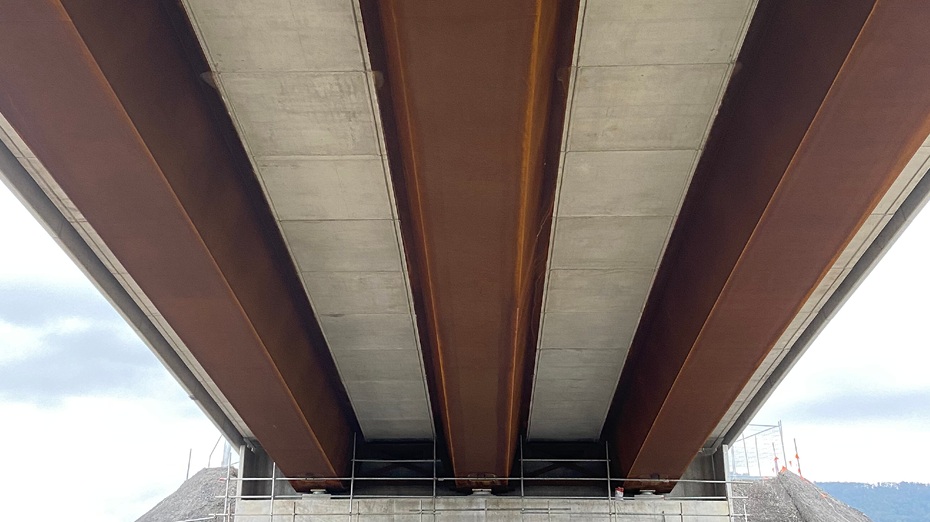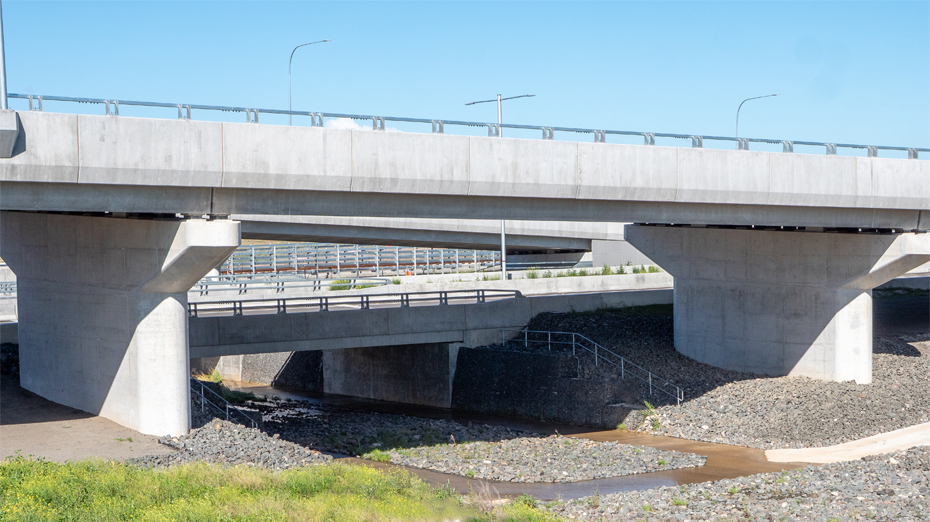
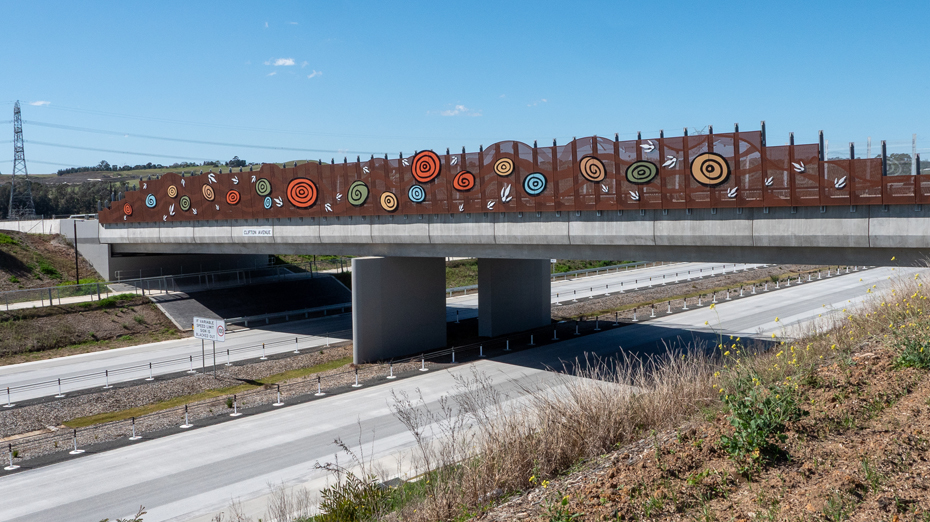
Precast concrete structural panels, parapets, and noise walls remove weather delays from the critical path and reduce the labour required on site. But there is a catch: producing thousands of tonnes of highly engineered concrete to program demands a manufacturer with serious, proven scalability.
We explain how precast concrete production scaling actually works across a major program, and how Ozcast approaches each stage, from the digital model through to just-in-time delivery, without compromising on quality.
Stage 1: 3D Modelling and Clash Detection
Efficient scaling begins long before the first pour. You cannot run high-volume production smoothly if design conflicts are being discovered on the factory floor.
At Ozcast, 3D modelling is standard practice. The client’s approved 2D designs are rendered into accurate 3D models, allowing rigorous clash detection, visualising exactly how complex steel reinforcement cages sit within each element and how components will meet at their connections. Resolving these conflicts digitally, against the approved drawings, prevents production delays, reduces material waste, and supports a clean fit during on-site installation.
This is not theoretical. On the M12 Central motorway package for Seymour Whyte, 3D modelling was used to identify and resolve potential issues before casting, contributing to a smoother, faster installation on site. The same approach supported the tight, sequenced delivery on the Warringah Freeway Upgrade. Getting the model right is what makes the volume that follows achievable.
Stage 2: Custom Steel Moulds and Precision Steel Fixing
Consistent mass production depends on the quality of the formwork. Robust steel moulds hold their dimensional accuracy across many repeated casts, which is what allows hundreds of near-identical elements to come off the line to the same tolerances.
The choice of mould strategy is itself a scaling decision, and it flexes to the project. On the Sydney International Speedway, where the program left no time to prepare steel moulds, conventional formwork was used to hit the deadline. On the Sydney Metro – Western Sydney International Airport line, a four-week manufacturing start, far shorter than the usual lead time for steel moulds, was met with a composite steel-and-foam mould solution so production could begin without delay.
Inside the moulds, skilled steel fixers assemble reinforcement to the approved drawings, with cage geometry and cover checked against those drawings before casting. Getting the steel right the first time is fundamental to producing at volume without rework.
Stage 3: Controlled Curing and High-Performance Concrete
Infrastructure elements such as rail parapets and load-bearing panels are specified with high-strength concrete mixes, developed to meet the relevant Australian Standards and Cement Concrete & Aggregates Australia (CCAA) best-practice guidance.
Scaling production means managing curing tightly. High-performance precast manufacturing relies on controlled temperature and moisture conditions to develop early strength predictably, so elements can be safely demoulded and moved through the yard on a reliable cycle rather than waiting weeks in the open. Controlled curing also supports density and durability, helping to limit shrinkage and thermal cracking in the finished element.
Whatever mix the project specifies, Ozcast manufactures to it exactly. The specification sets the performance requirements; the controlled factory process is what delivers them consistently, element after element, at scale. It is a core reason precast concrete lasts as long as it does under heavy dynamic loads.
Stage 4: Quality Assurance and Traceability
When manufacturing for critical infrastructure, “close enough” is a failure. Volume can never come at the cost of oversight, which is why QA runs through every stage of production rather than sitting at the end of it.
A tier-approved precast operation works under certified quality, environmental, and safety management systems, and manufactures in line with the governing Australian Standards, including AS 3600 for concrete structures and AS 3850 for prefabricated elements. Meeting these Australian Standards for precast concrete is the baseline for infrastructure supply.
In practice, QA checks span the process: verifying slump at the time of the pour, applying controlled vibration to expel air voids, and conducting compressive strength testing at 7 and 28 days. Every element is documented across its lifecycle, giving the client full visibility and traceability for each unit cast, from raw material batching through to dispatch. That documentation discipline is exactly what a procurement team is buying when it selects a supplier, and a major part of why choosing the right precast supplier matters.
Stage 5: Offsite Staging and Just-In-Time (JIT) Logistics
Producing the elements is only half the battle; staging and delivering them is the other. On congested infrastructure sites with little or no laydown space, the manufacturer effectively acts as an offsite storage buffer.
Ozcast stages finished, cured elements in its yard and coordinates closely with experienced heavy haulage operators, sequencing dispatch to the installation program. Just-in-time delivery means elements arrive as the site cranes are ready to receive them, avoiding bottlenecks and keeping the installation sequence moving.
This is proven at scale. On Sydney Gateway, Ozcast manufactured and delivered more than 1,400 barriers and parapets alongside 121 individually specified shells across a 23-month program beside a live airport. The ability to store and sequence delivery to match live site progress is what keeps a program of that size flowing.
Secure Your Precast Supply Chain
Major infrastructure projects demand a precast partner with the capacity, technology, and rigorous quality controls to deliver in full and on time.
Ozcast manufactures precast concrete elements strictly in accordance with approved project designs and specifications, backed by the QA traceability and delivery coordination proven across major NSW infrastructure programs. Contact our team today to discuss scaling solutions for your next major development.